June 7 2010
Teaching Link of the Day:
Teaching Link of the Day: National Summer Learning Association (formerly, National Center for Summer Learning, of John Hopkins University)
From the site:
A recent Johns Hopkins study found that 65 percent of the achievement gap in reading between poor and more advantaged ninth-graders is due to unequal summer learning experiences during elementary school years. That gap makes a difference in whether students decide to drop out or go on to college.
Teaching Link of the Day:
Sketching Lego Creations
I wrote about a Lego(R) and sketching exercise that we did last year, and this year the lego construction projects have become exponentially more complex. I've been encouraging one model a day become sketched, which increases difficulty to 3D, 2D, rounded bricks and bricks of odd shapes, internal perspectives for things like houses and drawing without grids. It's like jumping jacks for the brain.
Development of the Day:
I spent my afternoon filtering through all my pictures, downloading the newest version of Picasa, running AdAware because Picasa kept crashing, just to get an online album created with photos of the kids for the grandparents.
It took forever ...forever ...forever ...forever
But I don't have to do it again. Re: just upload them to the album when I upload them to my computer.
Teaching Link of the Day:
ASVAB testing
Story problems...chess timers... finding out I score off the charts... I love my job...
Food of the Day:
Fondue, with the homemade bread from the other night.
Show of the Day:
Olympic Games Closing Ceremonies
Teaching Link of the Day
Circle the command words when you read instructions
A bit down in the instruction is a powerpoint presentation after a discussion of CUBE the question.
Sometimes it's interesting that there are actual people actually teaching the strategies that I always thought I developed on my own on the course of my education.
I never called it CUBE, but this is exactly what I do and how I do it, and what I teach, especially to students who have a terrible time minding the instructions in the first place.
Game of the Day
Assassin's Creed II
Teaching Link of the Day
Block Letters and Shading Geometry in 3 dimensions
It all started with Star Wars...
Letters have geometry. They are square and triangular and circular, and drawing block shading makes them prisms. When you do a lesson on art and graphic design, never neglect the technical vocabulary, the science, the math. With young children, you never know if they're interested in the lesson because they will be architects or artists.
Geometric Shapes
Light and Shadow
Perspective and Depth
Angles and Parallelism
Development of the Day
New student: How to beat the ASVAB (Armed services vocational aptitude battery)
Show of the Day
Studio 60 Food of the Day
Bread--in a bread tube.
Teaching Link of the Day:
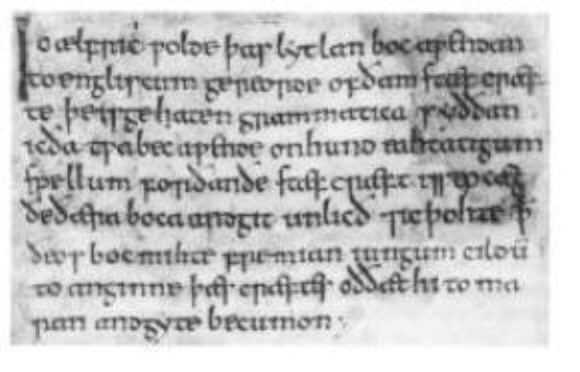
Reading without spaces
Using this as an aid for a student reluctant to read out loud with confidence--or at all in some cases--allows for the curiosity of the experience to overshadow the embarrassment of mispronouncing or guessing at a word. It eliminates the student's ability to guess at a word automatically based on its features as its features have not yet been revealed--features being landmark digraphs, ending letters, vowel patterns. Logic starts to creep in to ensure that the flow of language makes sense, where when reading standard print, a student like this can ignore logic and place any word in any location based on their preconceived notion that they're wrong anyway.
So what does the ability to read text without spaces show about a reader?
With mine, it showed her reading level nearly 250% the level she has been pegged at by her intervention teachers. Yes. Two-hundred-fifty percent higher. It's all psychology.
From the link:
"The few who could read text silently without these spaces between the words, like Julius Caesar and St. Ambrose, were viewed as so extraordinary that this ability is specifically recorded in historical records."
Teaching Link of the Day:
Using workbooks in a classroom.
One One One One
Pick one, any one. Using a workbook to teach and assess your students is not effective. You become distant from the actual process of teaching reading, pigeon-holed by the idea that you are a speaking version of the teacher--the workbook. You allow the workbook to guide your decisions.
And because of this, students appear to fail. Worse yet, they actually fail.
Food of the Day:
Chicken through a meat grinder makes great salad sandwich options. Mix with nigh on anything you'd put on your chicken and spread it on a sandwich.
P.S. I do not fail to see the irony of the meat grinder juxtoposed by the first few lines of this post on the front page.
Teaching Link of the Day:
Following Directions Dot to Dot
Well, almost. That's ALMOST it. Instead of translating 1 to the answer of the problem for 1, each problem has a true or false. Here, try this one:
Interestingly, neither 7-year-old I tested this on could complete the puzzle correctly on their own, and not due to lack of addition skills.
Show of the Day:
Teaching Link of the Day:
I got a piece of plexiglass. It's dry-erasable.
Being clear, infinitely versatile. The film on the back re-adheres without sticking to the word cards I had cut to go under the glass, instead holding them steadfastly in place. Three columns of words: noun, adjective, noun. The goal was to connect each word with another in a different column, thus organically creating very interesting metaphors and similes. Plus, it's cool to write on something big and clear. And next week, I can have something different to scribble about.
Show of the Day:
Now my kids are talking about how cool it would be to take apart and "explore" the rovers.
Teaching Link of the Day:
Rhyming is so not important
Truly, rhyming is an advanced skill of pattern recognition and comprehension. We've inundated ourselves in a world of rhymes to teach with--Mother Goose, Dr. Seuss--that an entire series of cognition development is being hurried, and ultimately suppressed, for some readers. Rhyming will dawn on children, but reading skills--sounding words out, comparison shopping in one's own mind for words with similar structures, roots and affixes--these must all be taught.
An astute child will more quickly notice that squid and wig share similar sounds than closet and deposit. Rhyming is a more advanced pattern. This is why we love freestyle rap, why we ponder orange and purple and silver well into adulthood, and why form poetry (sonnets, limericks, etc. ) have a special place in our hearts. (Have you noticed most limericks are raunchy?)
I repeat, rhyming just dawns on people. Like puns. It just happens. Quit forcing it on kindergartners.
Show of the Day:
I still keep saying this movie didn't make any sense. It just doesn't make any sense. It COULD make sense, but it was incredibly slow up to a point, and that point was the climax, leaving only denouement so it was over anyway, and the whole turning-point thing was vague and I didn't get what I was supposed to get at all. Just--vague.
Teaching Link of the Day:
Take Apart Party, or Teaching kids to tinker
The kids had a "talking" book with pen that teaches word preliminary reading techniques like rhyming, initial sounds, etc. It got an odd short where it would randomly start and start playing the games by itself, so I rescued the book from the electronic part. The kids watched me remove screws and slice through the contact pad that connected the plastic electronics part to the book cover. I walked away to get the tape and mend the raw edge of the book and when I returned the boy had the screwdriver and was deep in reassembly. During the course of the next few days, the toy was taken apart and put together countless times. The circuit boards were removed and inspected. Capacitors were removed, buttons dissected. "Mom, can we explore this [part of a light-up bouncy ball]?" They brought out a dead calculator and a display phone. They laid on the floor with a set of small screwdrivers and removed every part from every other part.
Album of the Day:
Cape Cod Kwassa Kwassa covered by Peter Gabriel, recorded for though not included on his cover album, Scratch My Back.
Teaching Link of the Day:

Reading of the Day:
Taste of Home Cookbook
As a prize for selling magazines last fall for a Girl Scout fundraiser, my daughter chose among four choices of books as a reward. She--a seven year old--chose the cookbook. I was shocked to discover it was not a small, thirty- or fifty-page book of selected recipies, but instead, a full-blown assemblage of culinary variety in a five-ring notebook. It came with a Celebrations CD-rom, with party ideas from appetizers to table decorations. She spent the afternoon discovering teas and Valentine's appetizers.
Teaching Link of the Day:
The Next Great Young Chef Contest
Maybe she can cook her way to college.
Teaching Link of the Day:
Body Letters
I found an ad in an old Reader's Digest and instantly tore it out as an assignment for my children to do together in some of their self-guided school time. Their instructions were A-Z, a-z, 1-9 "exercises". They not only wore themselves out giggling, occupied an hour of their time, and used their creativity and teamwork, they stretched their muscles, fought gravity, and showed off their youthful limberness.
Granny Square of the Day:
OK! So here's the stripe experiment. It looks kind of sloppy. I have some ideas to make it better. The one on the left is the "right" side and the one on the right is the "wrong" side. I crochetted the wrong side like I knit stockinette, so that both strings were on my side of the piece when I was working on the "wrong" side rounds, and were on the other side of the piece when I was working on the "right" side rounds.
Things to note:
A--these clusters are the first clusters of each round and have no center stripe because I evaluated the distance the blue string would have to travel to get there and double back. It should be just fine to do, I just didn't do it.
B--these loops occurred every round, but the successive round engulfed them.
C--Corners are tricky. I was constantly adjusting the tension as I switched between yarns and ended up pulling the blue too tightly in these spots. It's easy to forget to wrap around it if it's not right there, and wrapping around it while it's tight pulls so that the corners are uneven.

So as for making it better, I think I can go ahead and crochet like knitting garter stitch so that every round has the yarn in back. Instead of the second stitch of the first two double stitches for each cluster being the same color as the first stitch, it will be the same color as the next stitch, so the first stripe of the cluster is pink, so the yarn on the hook is pink, the loop is pink, the catch is pink, the first stitch is pink, but the second stitch is blue. Then the second stripe is blue, so the yarn on the hook is blue (the result of the second stitch of the previous double stitch) the wrap is blue, the catch is blue, the first stitch is blue, the second is pink. Because the third stripe is the same color as the chain between clusters and the first stripe of the next cluster, all the stitches of the third stripe will be pink. I think this will straighten the colors out in each cluster so the stripe effect is less muddled.
Readings of the Day:
Below are some alliterate poems for reluctant readers. It's like the condensed Fox in Sox.
Song of the Pop-Bottlers
by Morris Bishop
Rhinoceros Stew
Mildred Luton
Potato Chips
Anthony E. Gallagher
The Man in the Onion Bed
John Ciardi
Waiters
Mary Ann Hoberman
Teaching Link of the Day: Brian P. Cleary
Staggering success in the world of a LD reader with How Much Can a Bare Bear Bear? led to an extensive exploration into the fun world of linguistics for children. Ys,
Reading of the Day:
Parent and Child Rights in Special Education
Appropriately light reading for during lunch between students, right?
Food of the Day:
Baked the Friendship Bread. 6 loaves. Kept one starter unbaked. More bread in 10 days.
Show of the Day:
Even Beer is Art, says I. Drink up.
"American beer and canoes" -Oscar Wilde
This day in History:
First Groundhog Day 1887
Though this link cites an earlier date, This Day in History is still the First Groundhog Day. That's just how it works.
Teaching Link of the Day:
Current Events
Where a million things can happen around the world but the way they affect us is through filtered-down effects of effects of effects eventually attributable to a cause, which is an effect of something else, ultimately.
Current Events, where you take a peek at one tiny moment of a timeline.
Granny Square of the Day:
Oooh pretty I changed colors in a round...I think I'll try tomorrow's completely striped thus.
Random Fact of the Day:
All founding members of the band Chicago were Sinfonians from DePaul University.
Lee D. Loughnane, Kappa Phi (DePaul) ’65
James C. Pankow, Kappa Phi (DePaul) ’66
Walter J. Parazaider, Kappa Phi (DePaul) ’64
As founding members of the rock-jazz fusion band Chicago, Lee Loughnane (trumpet), James Pankow (trombone) and Walt Parazaider (woodwinds) have been a part of the horn section of the band since its inception. Each have been writing, arranging, recording, and touring for over 40 years. Their influence has led the band to sell over 120 million albums worldwide, with 22 Gold, 18 Platinum, and 8 Multi-Platinum albums. Over the course of their career, they have charted five No. 1 albums, and have had twenty-one top ten hits.
1. Only for today, I will seek to live the livelong day positively without wishing to solve the problems of my life all at once.
2. Only for today, I will take the greatest care of my appearance: I will dress modestly; I will not raise my voice; I will be courteous in my behavior; I will not criticize anyone; I will not claim to improve or to discipline anyone except myself.
3. Only for today, I will be happy in the certainty that I was created to be happy, not only in the other world but also in this one.
4. Only for today, I will adapt to circumstances, without requiring all circumstances to be adapted to my own wishes.
5. Only for today, I will devote 10 minutes of my time to some good reading, remembering that just as food is necessary to the life of the body, so good reading is necessary to the life of the soul.
6. Only for today, I will do one good deed and not tell anyone about it.
7. Only for today, I will do at least one thing I do not like doing; and if my feelings are hurt, I will make sure that no one notices.
8. Only for today, I will make a plan for myself: I may not follow it to the letter, but I will make it. And I will be on guard against two evils: hastiness and indecision.
9. Only for today, I will firmly believe, despite appearances, that the good Providence of God cares for me as no one else who exists in this world.
10. Only for today, I will have no fears. In particular, I will not be afraid to enjoy what is beautiful and to believe in goodness. Indeed, for 12 hours I can certainly do what might cause me consternation were I to believe I had to do it all my life.
--Pope John XXIII